
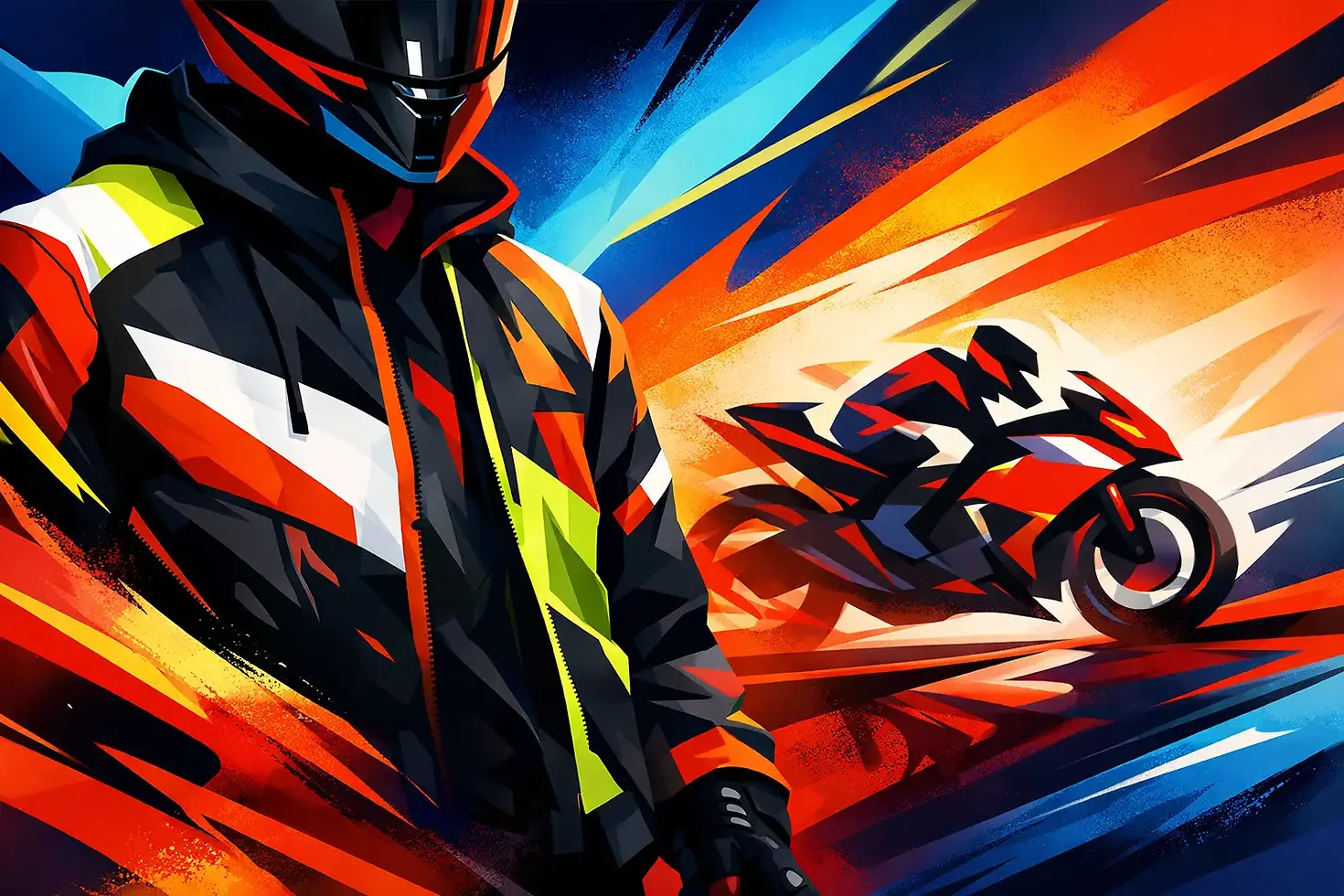
Moto Inspired Streetwear That Actually Hits
- Julio Samuel Lopez
- Jul 6
- 5 min read
Most brands get moto inspired streetwear wrong in the first five seconds. Too clean, too costume, too eager to look dangerous without ever touching asphalt. Real moto style has friction in it. It comes from speed, weather, noise, bad pavement, late nights, and the kind of city miles that leave marks on your boots and your point of view.
That is why the best version of this look never feels like cosplay. It feels lived in. It carries the discipline of riding and the attitude of the street at the same time. Not biker bar cliché. Not runway parody. Just hard lines, functional details, and enough edge to hold up under neon, daylight, and everything in between.
What moto inspired streetwear really means
At its core, moto inspired streetwear is street fashion built with the visual language of riding culture. Think protective silhouettes, cropped or structured jackets, heavy cotton, washed finishes, utility pockets, racing stripes, mechanical graphics, and pieces that look better after a little abuse. The point is not to dress like you are heading to the track. The point is to wear clothes that carry the tension of movement.
That tension matters. Streetwear has always borrowed from uniforms, workwear, sport, and subculture because those worlds come with history. Moto culture brings its own code - speed, risk, discipline, crew loyalty, and a certain refusal to be soft around the edges. When that code gets translated well, the result feels sharp and honest.
When it gets translated badly, it looks generic fast. A random flame graphic does not make a piece feel rooted in riding. Neither does slapping a faux-racing logo on a basic tee. The difference is whether the design understands the source. Good moto influence shows up in structure, fabric, wearability, and attitude before it ever shows up in graphics.
Why moto inspired streetwear keeps pulling people in
Some trends come and go because they only work in photos. This one sticks because it solves a real style problem. A lot of people want clothes that feel tougher than standard basics but less forced than full-on biker gear. Moto inspired streetwear lives right in that middle lane.
It gives you a silhouette with backbone. Jackets sit with purpose. Tees feel heavier. Denim looks like it has seen something. Even a simple tank or cropped layer can carry that stripped-down, road-tested energy when the cut is right. You do not need a helmet in hand to wear it. You just need to connect with what it signals - motion, grit, and independence.
There is also a deeper pull. Riding culture is not just about machines. It is about belonging without begging for approval. It is about finding your crew, taking the long way home, and building identity through miles instead of algorithms. For city riders, artists, night runners, and anyone who moves through the world a little sideways, that message lands hard.
The pieces that make the look work
A strong moto-streetwear wardrobe usually starts with outerwear. Cropped jackets, denim with structure, and pieces with a slightly aggressive shoulder line do a lot of the heavy lifting. They create shape fast, and shape is what keeps the outfit from reading flat. A washed jacket with clean hardware can say more than a loud graphic ever will.
Then come the tees. This is where many brands play it safe, but a good tee in this lane should feel substantial. Heavy cotton, vintage washes, and graphics that nod to roads, speed, city nights, or crew identity all hit harder than disposable basics. A tee should look like it belongs under a jacket at midnight and on its own at noon.
Bottoms matter more than people admit. If the pants are wrong, the whole fit collapses. Straight denim, worn black jeans, utility trousers, and cuts with enough structure to balance the upper half usually work best. Super-thin or overly polished pants can kill the tension that makes the style interesting.
For women, the category opens up in a way that feels especially strong right now. Cropped denim jackets, fitted tanks, sports bras under open layers, and high-rise denim can pull moto cues into a sharper street silhouette without losing toughness. The key is contrast - fitted against oversized, clean against distressed, athletic against rigid.
Footwear seals it. Boots are the obvious move, but not the only one. A worn-in high-top or a low-profile sneaker can work if the rest of the fit carries enough weight. What matters is that the shoes do not feel precious. This style needs traction, visually and otherwise.
How to wear moto inspired streetwear without looking forced
The first rule is restraint. If every piece is screaming for attention, the fit starts looking like a theme party. One strong jacket, one graphic anchor, one textured layer - that is usually enough. Let the rest of the outfit support the mood.
The second rule is to respect function, even if you are dressing for the city and not the ride. Utility details should make sense. Fabrics should have some substance. Cuts should allow movement. The reason moto style looks good is that it comes from a world where clothes do something. Keep that energy intact.
The third rule is wear and tear. Not fake destruction for its own sake, but a little roughness helps. Vintage wash, faded black, broken-in denim, softened cotton - these details give the look memory. Fresh-out-of-the-box perfection can feel sterile in a category built on grit.
It also depends on where you live and how you move. In Los Angeles, the look often runs lighter - cropped layers, tanks, washed tees, denim, and sunglasses after dark. In colder cities, it leans heavier with layered outerwear, hoodies, gloves, and thicker pants. Same language, different climate. The point is not to copy a uniform. The point is to translate the code into your own lane.
Where brands miss the mark
The biggest mistake is treating moto as an aesthetic shortcut. A few checkerboard details, some fake sponsor graphics, maybe a red stripe, and suddenly it is supposed to feel authentic. But authenticity is not a decal pack. It is a point of view.
Another miss is overdesign. Real rider influence often looks cleaner than people expect. The power comes from silhouette, quality, and restraint. If every seam, patch, and print is trying to prove something, the garment starts feeling insecure.
There is also the issue of comfort. Some fashion brands borrow the hard look of moto without thinking about how people actually wear clothes day to day. If it cannot move, breathe, layer, or survive repeat wear, it is not built for this world. Streetwear with moto DNA should still be easy to live in.
That is why the best labels in this space build a full atmosphere, not just isolated products. They understand that people are buying into a rhythm - city rides, night air, warehouse light, fuel stops, early call times, friends who feel like family. Ungelöst MC gets that tension right when the product and the story move together.
Moto inspired streetwear is bigger than a trend
What keeps this category alive is that it speaks to more than fashion. It gives people a way to dress with intent. Not polished. Not sloppy. Not chasing luxury codes that have nothing to do with real life. Just direct, hard-wearing style with subculture behind it.
That matters now because so much clothing feels empty the second you touch it. Too trend-led, too anonymous, too easy to forget. Moto-inspired pieces have a chance to carry more weight because they come from a culture with real stakes. Speed has consequences. Roads are unpredictable. Crew loyalty means something. Even when the garments are made for everyday wear, those ideas still show up in the final shape.
And that is the real appeal. Moto inspired streetwear lets you wear the asphalt without pretending to be someone you are not. It leaves room for riders, for creatives, for people who just want their clothes to feel sharper and more alive. If the fit carries grit, function, and a little night in it, you are already close. Start there, wear it hard, and let the miles do the rest.


Comments